Rigging and Signaling Are the Backbone of Safe Lifting
On any job site where heavy loads are moved, two roles stand out. The rigger and the signal person. These are the people who make sure loads are secured, balanced, and guided safely from point A to point B. Without them, even the best equipment can become a hazard.
That is exactly why rigging and signaling certification is required on most job sites. It is not just about knowing how to attach a sling or wave a hand signal. It is about understanding the science, the risks, and the responsibility that come with every lift.
At Industrial Consulting & Training LLC, we focus on building those skills the right way so crews can work smarter and safer every day.
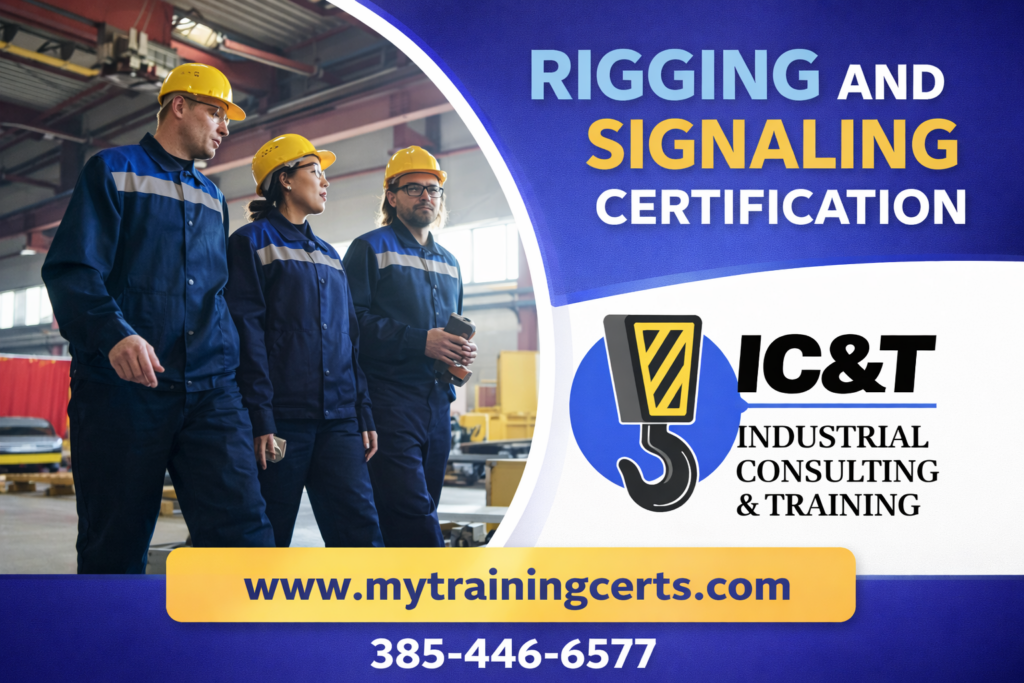
What Rigging Certification Really Means
Rigging involves preparing loads for lifting. That includes selecting the right equipment, calculating load weight, and making sure everything is secure before the lift begins.
With proper rigging and signaling certification, workers learn how to:
• Choose the correct slings, chains, and hardware
• Understand load angles and weight distribution
• Inspect rigging equipment for wear and damage
• Set up loads to prevent shifting or falling
• Follow OSHA safety guidelines for lifting operations
It is not guesswork. It is a technical skill that requires training and practice. When done right, it reduces the risk of dropped loads and equipment failure.
The Role of the Signal Person
Now let’s talk about signaling. Even the best crane operator cannot see everything. Blind spots are a real issue on busy job sites. That is where the signal person steps in.
Certified signal persons are trained to guide operators using standard hand signals or radio communication. They act as the eyes and ears of the operation. They make sure the lift stays controlled and everyone around stays safe.
Through rigging and signaling certification, workers learn clear communication techniques, proper positioning, and how to stay aware of their surroundings at all times.
Why Certification Is Required on Job Sites
There is a reason certification is not optional. Job sites are full of moving parts. One mistake during a lift can lead to serious injury, equipment damage, or even fatalities.
Regulations from OSHA require that riggers and signal persons are qualified. Certification proves that a worker has the knowledge and training to perform these tasks safely.
But beyond compliance, certification builds trust. Employers know their crew is prepared. Workers know their teammates understand the process. And that shared confidence keeps operations running smoothly.
Common Risks Without Proper Training
Without proper training, rigging can go wrong fast. Loads can swing, shift, or drop. Signals can get misread. Equipment can fail under pressure.
These issues often come down to a lack of understanding. Maybe someone used the wrong sling. Maybe the load weight was misjudged. Or maybe communication broke down at the worst moment.
That is why rigging and signaling certification is so important. It removes the guesswork and replaces it with proven methods and clear procedures.
How Our Training Makes a Difference
At Industrial Consulting & Training LLC, we do not just cover the basics. We focus on real-world application. Our training is designed to prepare workers for what actually happens on job sites.
We walk through common scenarios, discuss real risks, and show how to handle them step by step. This approach helps workers connect the dots between theory and practice.
We also emphasize online NCCER Rigger Training, which is widely recognized across industries. This program gives workers a solid foundation in rigging principles while meeting national standards. It is a great way to build credibility and confidence at the same time.
Building Skills That Stick
Training should not feel like a checklist. It should stick with you long after the class ends. That is why we keep our sessions interactive and practical.
We encourage questions, discussions, and real problem-solving. Workers do not just memorize information. They learn how to think through situations and make safe decisions under pressure.
Over time, these skills become second nature. That is when you start seeing fewer mistakes and smoother operations.
Who Needs Rigging and Signaling Certification
This certification is not just for crane operators. It is essential for:
• Construction workers
• Equipment operators
• Riggers and signal persons
• Maintenance crews
• Anyone involved in lifting or moving heavy loads
If your job involves cranes, hoists, or lifting gear, this training is a must. It protects you, your team, and the entire worksite.
A Safer Job Site Starts with the Right Training
Every lift carries risk. But with the right training, that risk can be managed and controlled. Certified workers understand the process, communicate clearly, and stay alert from start to finish.
At Industrial Consulting & Training LLC, we help crews build those habits from day one. Our rigging and signaling certification programs are designed to meet industry standards while preparing workers for real challenges.
Final Thoughts
Rigging and signaling are not just tasks. They are critical safety roles that keep job sites running smoothly. Certification ensures that the people handling these responsibilities know exactly what they are doing.
If you want a safer, more efficient crew, it starts with proper training. Our programs give workers the skills they need to perform with confidence.
Let’s get your team certified, prepared, and ready to handle every lift the right way.