

Understanding Silica Dust in Mining
Silica dust shows up more often than many expect. It forms when materials like stone, sand, and gravel are cut, drilled, or crushed. These tasks release fine particles into the air. Workers may not always see them, but they are there. Over time, repeated exposure can create risks if proper controls are not in place. That is why awareness and monitoring are essential parts of daily operations.
What Is MSHA Silica Sampling?
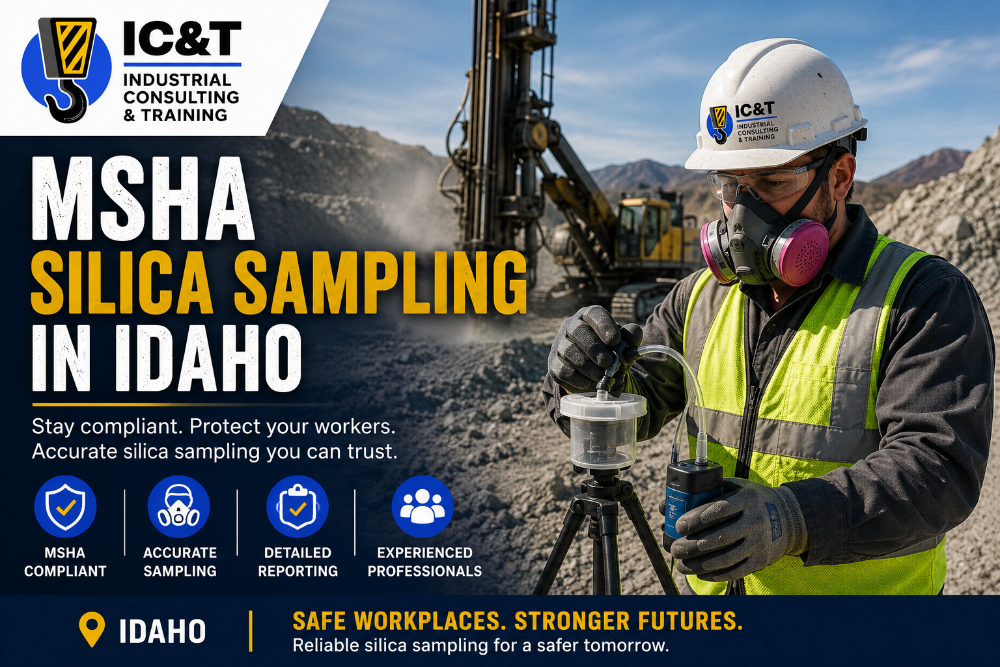
Silica sampling is a process used to measure how much respirable crystalline silica is present in the air at a worksite. Special equipment collects dust samples during a shift. These samples are then analyzed to determine exposure levels.
The purpose is simple. It helps employers understand whether conditions fall within acceptable safety limits. If levels are too high, changes must be made. This could include improving ventilation, using water suppression, or updating work practices.
Why MSHA Silica Sampling in Idaho Is Important
Mining and aggregate operations across Idaho often involve materials that naturally contain silica. Because of this, MSHA Silica Sampling in Idaho plays a key role in maintaining safe job sites.
Regular sampling helps identify problem areas before they turn into serious concerns. It also supports compliance with MSHA regulations. More importantly, it helps protect workers over the long term. When exposure is monitored closely, companies can take action early and keep operations running safely.
How Silica Sampling Is Conducted
Sampling does not have to be complicated, but it does need to be done correctly. Typically, workers wear a small sampling device during their shift. This device collects airborne dust particles in the breathing zone.
After collection, the samples are sent for analysis. The results show how much silica dust was present during that time. From there, employers can compare the numbers to MSHA limits and decide on next steps.
Consistency matters here. One test is helpful, but ongoing sampling provides a clearer picture of workplace conditions.
Common Sources of Silica Exposure
Silica dust can come from several routine tasks. Crushing rock is one of the biggest sources. Drilling and blasting also release fine particles into the air. Even loading and transporting materials can create dust if conditions are dry.
Indoor areas can sometimes make things worse if ventilation is limited. Outdoor sites are not immune either. Wind can carry dust across different areas, exposing more workers than expected.
Because of these factors, regular monitoring becomes a must, not a maybe.
How We Support Silica Monitoring and Training
At Industrial Consulting & Training LLC, we help teams understand how silica exposure happens and what steps reduce the risk. Our training programs cover sampling basics, hazard awareness, and proper safety practices.
We focus on real job scenarios. Workers learn how to identify high-risk tasks and respond effectively. We also guide employers on how to interpret sampling results and take corrective action when needed.
The goal is clear. Build confidence, improve awareness, and support safer operations every day.
Benefits of Online Training for Silica Awareness
Online training makes it easier for teams to stay informed without slowing down operations. It allows workers to access structured lessons from different locations while keeping learning consistent.
We offer guided online sessions that walk participants through silica hazards, sampling procedures, and compliance requirements. This format helps teams stay up to date while managing busy schedules.
Another advantage is flexibility. Companies can train multiple workers without arranging travel or extended downtime. That means safety knowledge spreads faster across the workforce.
Staying Compliant with MSHA Standards
Compliance is not just about passing inspections. It is about maintaining safe working conditions every day. MSHA sets clear exposure limits, and silica sampling helps ensure those limits are not exceeded.
Employers who monitor dust levels regularly are better prepared for inspections. They also build stronger safety systems over time. Documentation from sampling programs provides proof that proper steps are being taken.
In the long run, consistent compliance reduces risks, avoids disruptions, and supports a safer workplace culture.
Take the Next Step Toward Safer Operations
Understanding silica exposure is one thing. Acting on it is another. We help bridge that gap with practical training and clear guidance.
Want to strengthen your safety program? Connect with Industrial Consulting & Training LLC today to learn how our silica training and monitoring support can fit your operation.
FAQs
Q. What is the purpose of silica sampling in mining?
Ans: Silica sampling measures airborne dust levels to ensure they remain within MSHA safety limits and help prevent overexposure.
Q. How often should silica sampling be conducted?
Ans: It depends on site conditions, but regular sampling is recommended, especially when processes or materials change.
Q. Who needs to follow silica sampling requirements?
Ans: Mining operators and employers must ensure proper monitoring to meet MSHA regulations and protect workers.
Q. Can silica exposure occur outdoors?
Ans: Yes, outdoor environments can still have airborne dust, especially during dry or windy conditions.
Q. Does training help reduce silica exposure risks?
Ans: Yes, proper training improves awareness, helping workers identify hazards and follow safer work practices.
Ready to improve compliance and awareness? Reach out to Industrial Consulting & Training LLC and get started with structured online training designed for real mining conditions.