Construction sites can get hectic. Heavy loads move constantly. Equipment operates in tight spaces. One small mistake can lead to serious trouble. That is why proper rigging knowledge is not optional. It is essential.
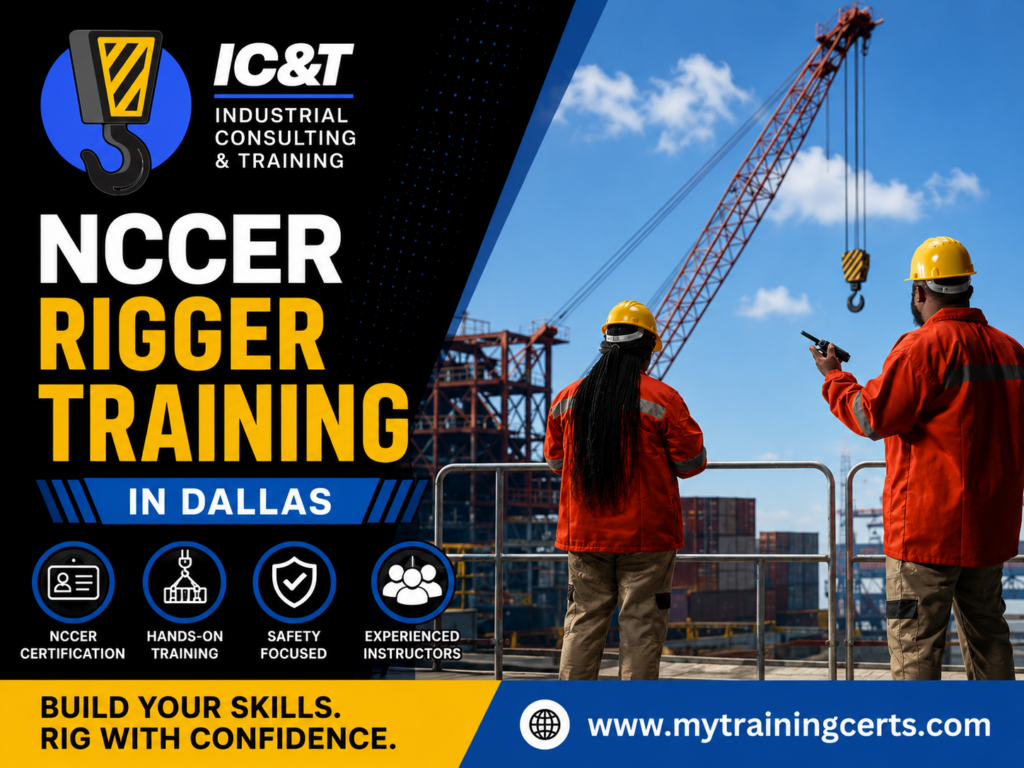
With NCCER Rigger Training in Dallas, workers gain the skills needed to handle lifting operations safely and efficiently. And when rigging is done right, the entire job site runs smoother.
Why Rigging Safety Matters More Than Ever
Rigging is at the center of many construction tasks. Cranes, hoists, and lifting gear all depend on proper setup. If something goes wrong, the risks are immediate.
Improper rigging can lead to:
• Dropped loads
• Equipment damage
• Worker injuries
• Project delays
That is why employers prioritize workers who understand rigging principles. Training helps prevent these issues before they even start.
How Rigger Training Builds Strong Safety Awareness
Safety starts with awareness. Workers need to recognize risks before they turn into problems.
Through NCCER Rigger Training in Dallas, workers learn how to:
• Identify load hazards
• Understand weight limits
• Inspect rigging equipment
• Spot unsafe lifting conditions
This kind of awareness makes a big difference. Workers begin to think ahead instead of reacting at the last second.
Understanding Load Control and Stability
One of the biggest challenges in rigging is controlling the load. It is not just about lifting. It is about keeping the load stable from start to finish.
Training teaches workers how to:
• Balance loads correctly
• Choose the right slings and hardware
• Calculate load weight and center of gravity
• Prevent swinging or shifting
When workers understand load behavior, accidents drop significantly. And the work gets done faster too.
The Role of Communication on Site
Rigging is never a one-person job. It requires teamwork. And teamwork depends on clear communication.
Workers trained through NCCER Rigger Training in Dallas learn how to:
• Use standard hand signals
• Communicate with crane operators
• Coordinate movements with team members
• Respond quickly to changes
Good communication keeps everyone in sync. It reduces confusion and keeps operations safe.
Why Equipment Inspection Skills Are Critical
Faulty equipment is a hidden danger. A worn-out sling or damaged hook can fail without warning.
Training helps workers understand how to inspect rigging gear properly. This includes:
• Checking for wear and tear
• Identifying damaged components
• Knowing when to remove equipment from use
• Following safety guidelines for maintenance
Regular inspection prevents failures before they happen. It is one of the simplest ways to improve site safety.
How Online Training Makes Learning More Accessible
Not every worker can attend in-person sessions. That is where online training comes in.
We offer NCCER Rigger Training in Dallas through live online sessions. Workers can join from different locations and still get the same level of instruction.
This approach helps companies:
• Train teams without stopping operations
• Reach workers across multiple job sites
• Maintain consistent safety standards
And since sessions are interactive, workers stay engaged and learn better.
Building Confidence in High-Risk Situations
Confidence plays a big role in safety. Workers who are unsure tend to hesitate or make mistakes.
Training builds confidence by giving workers the knowledge they need to act correctly. They learn what to do, how to do it, and why it matters.
After completing NCCER Rigger Training in Dallas, workers are more likely to:
• Make informed decisions
• Handle equipment with care
• Speak up about unsafe conditions
That confidence leads to safer job sites.
How Training Supports Overall Site Efficiency
Safety and efficiency go hand in hand. When rigging is done properly, projects move forward without delays.
Trained workers help:
• Reduce downtime
• Prevent rework
• Improve coordination
• Keep projects on schedule
So, investing in training is not just about safety. It is also about productivity.
Why Employers Rely on Structured Training Programs
Employers want results they can trust. That is why structured training programs matter.
At Industrial Consulting & Training LLC, we focus on practical learning. Our programs are designed to match real job conditions, not just theory.
With NCCER Rigger Training in Dallas, we help workers build skills that translate directly to the job site. That makes a real difference in daily operations.
Improve Safety on Your Job Site
If you want to reduce risks and improve performance, investing in proper rigging training is a smart move. Get started with NCCER Rigger Training in Dallas through Industrial Consulting & Training LLC and give your team the skills they need to work safely and confidently.
FAQs
Q. What is NCCER Rigger Training in Dallas?
Ans: It is a structured training program that teaches workers how to safely handle rigging tasks, including lifting, load control, and equipment inspection.
Q. Why is rigging training important for construction safety?
Ans: It helps prevent accidents like dropped loads and equipment failures by teaching proper techniques and safety practices.
Q. Can rigger training be completed online?
Ans: Yes. Many programs offer live online sessions that provide interactive learning and real-time instruction.
Q. What skills do workers gain from rigger training?
Ans: Workers learn load handling, hazard identification, communication, and equipment inspection skills.
Q. How does rigger training improve job site efficiency?
Ans: It reduces errors, prevents delays, and helps teams work more smoothly, which keeps projects on schedule.
Looking to Build a Safer, More Efficient Team?
Our training programs are designed to deliver real results. Help your crew handle lifting operations the right way with NCCER Rigger Training in Dallas from Industrial Consulting & Training LLC. Reach out today and take the first step toward a safer job site.